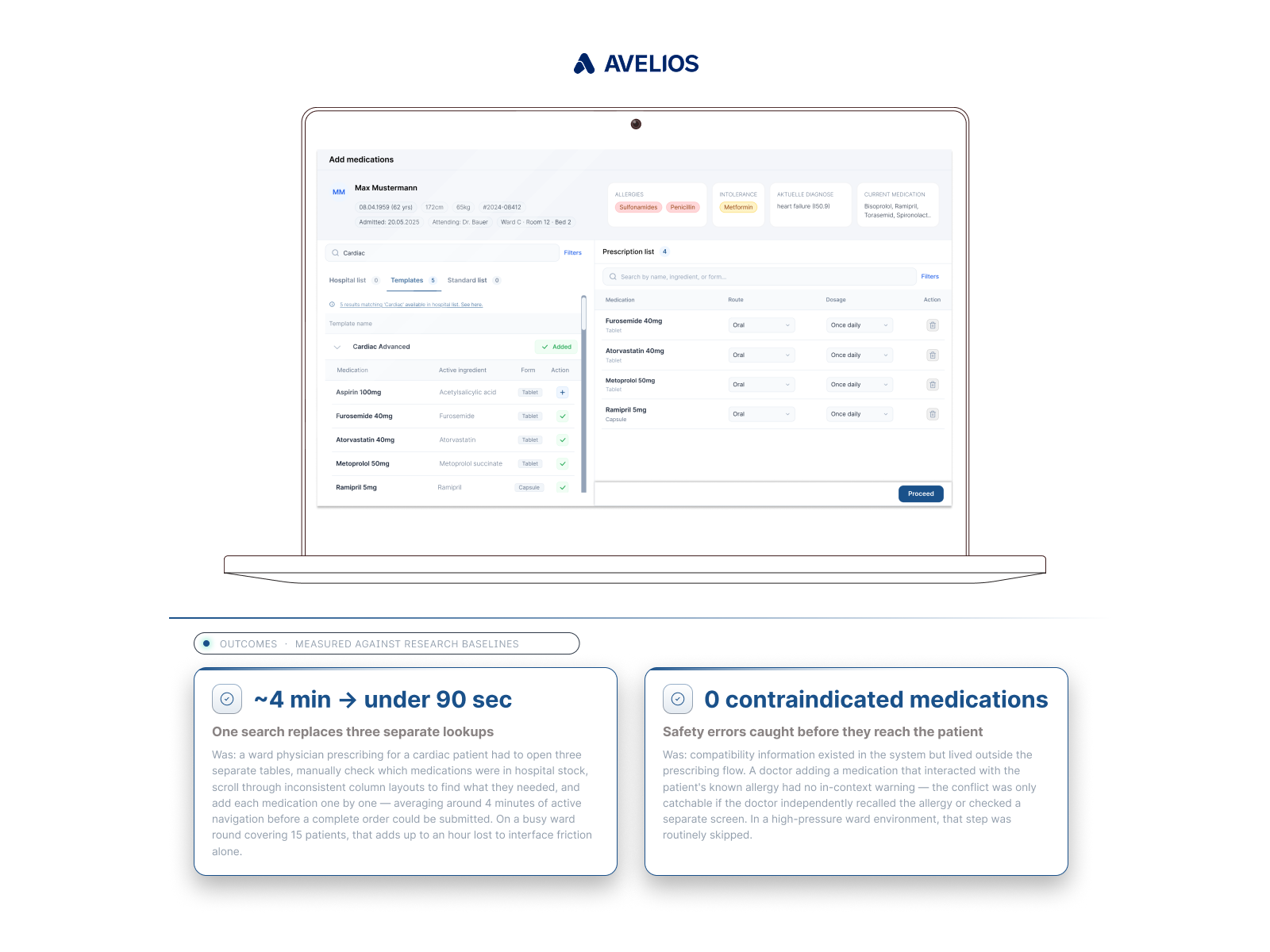
Avelios Medical is a German hospital information system that digitizes clinical workflows for inpatient care.


MY ROLE
My approach began with evaluating the current structure against validated clinical assumptions confirmed through interviews with practicing physicians and competitive analysis of CPOE systems, including Epic and Cerner.
design rationale
The solution introduces source-aware tabbed search with cross-list awareness: hospital list as the default scope, intelligent cross-reference hints when results are found in other sources, and templates surfacing contextually when a searched medication matches a pre-configured regimen. The prescription cart provides inline compatibility checking against patient allergies and current medications, duplicate prevention at the result level, and a review and sign confirmation flow.
The design was validated through an unmoderated usability study in Maze and a moderated think-aloud session with a clinician, testing three critical scenarios.
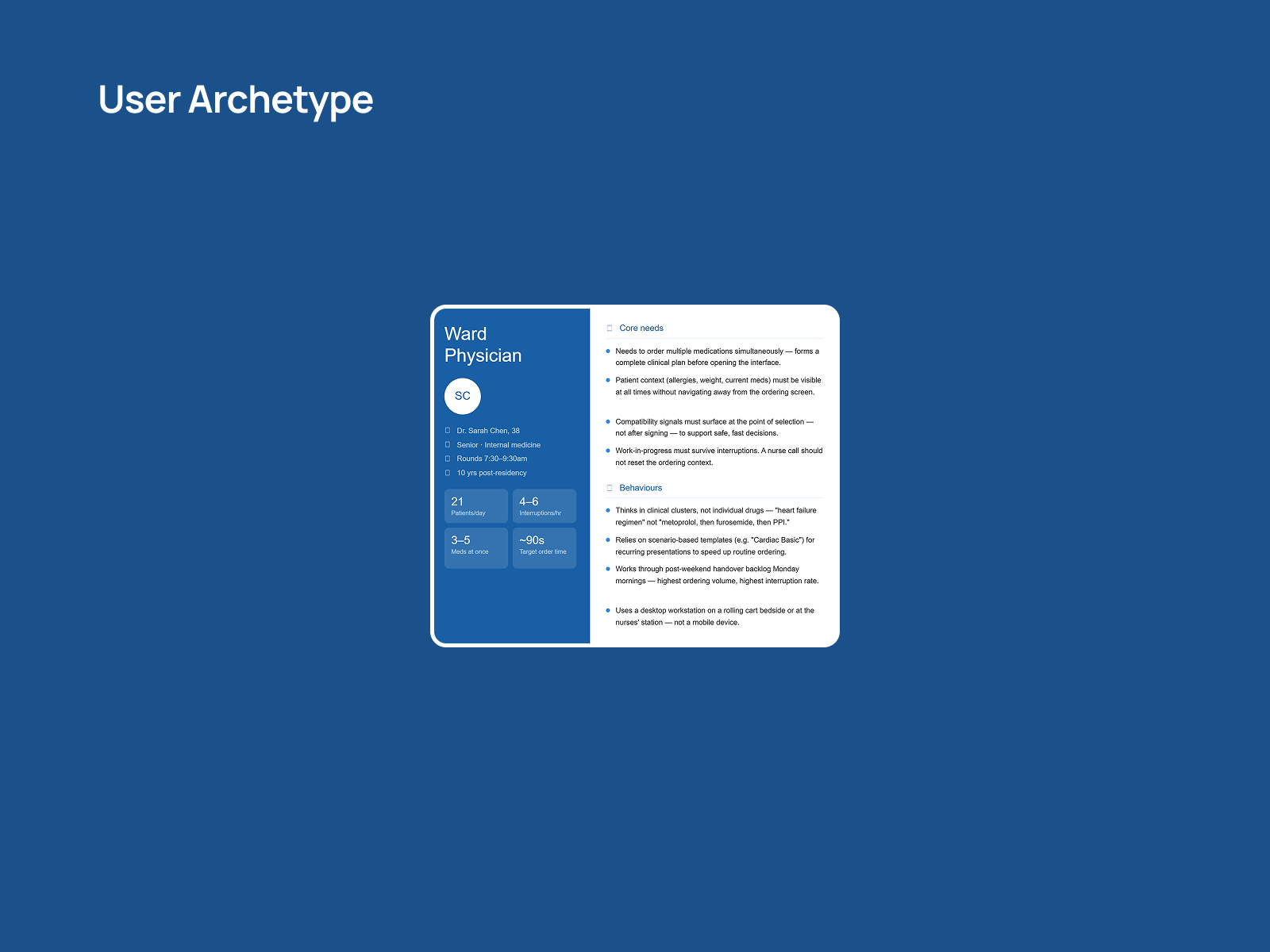
Ward physician archetype
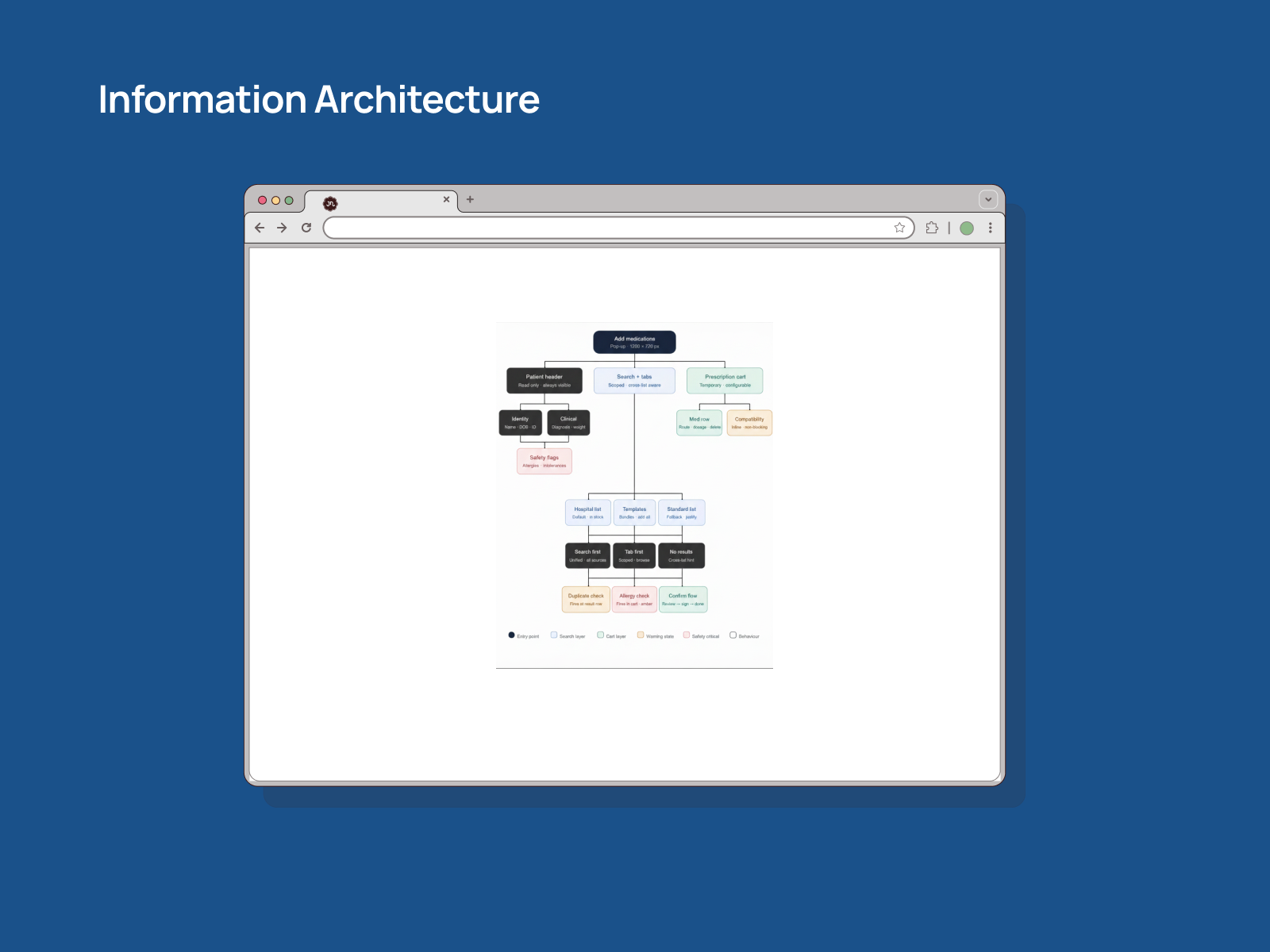
The IA is structured in five levels, reading top to bottom. The root pop-up splits into three parallel concerns: patient context on the left (read-only, always visible), search and navigation in the center, and the prescription cart on the right. The search layer branches into the three source tabs, each spawning the three search behavior modes. Safety checks and the confirmation flow sit at the bottom as the terminal layer—they fire last, after selection is complete.
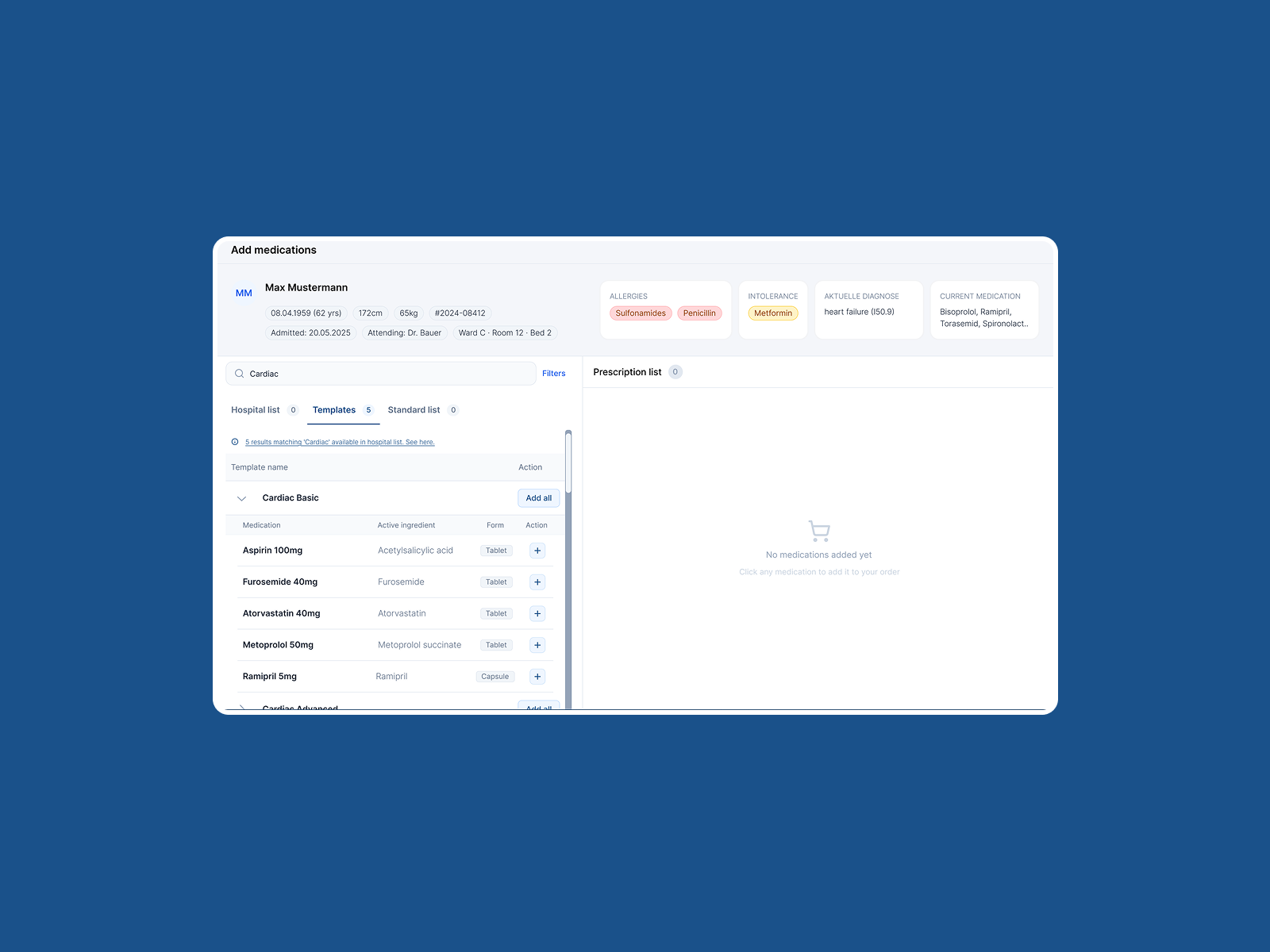
The doctor searches the cardiac hospital list, returns zero individual matches; the system automatically surfaces the templates tab with five matching regimens. The cross-list hint informs the doctor that five results exist in the hospital list. The cardiac basic template is expanded, showing all contained medications with individual add or add-all actions.
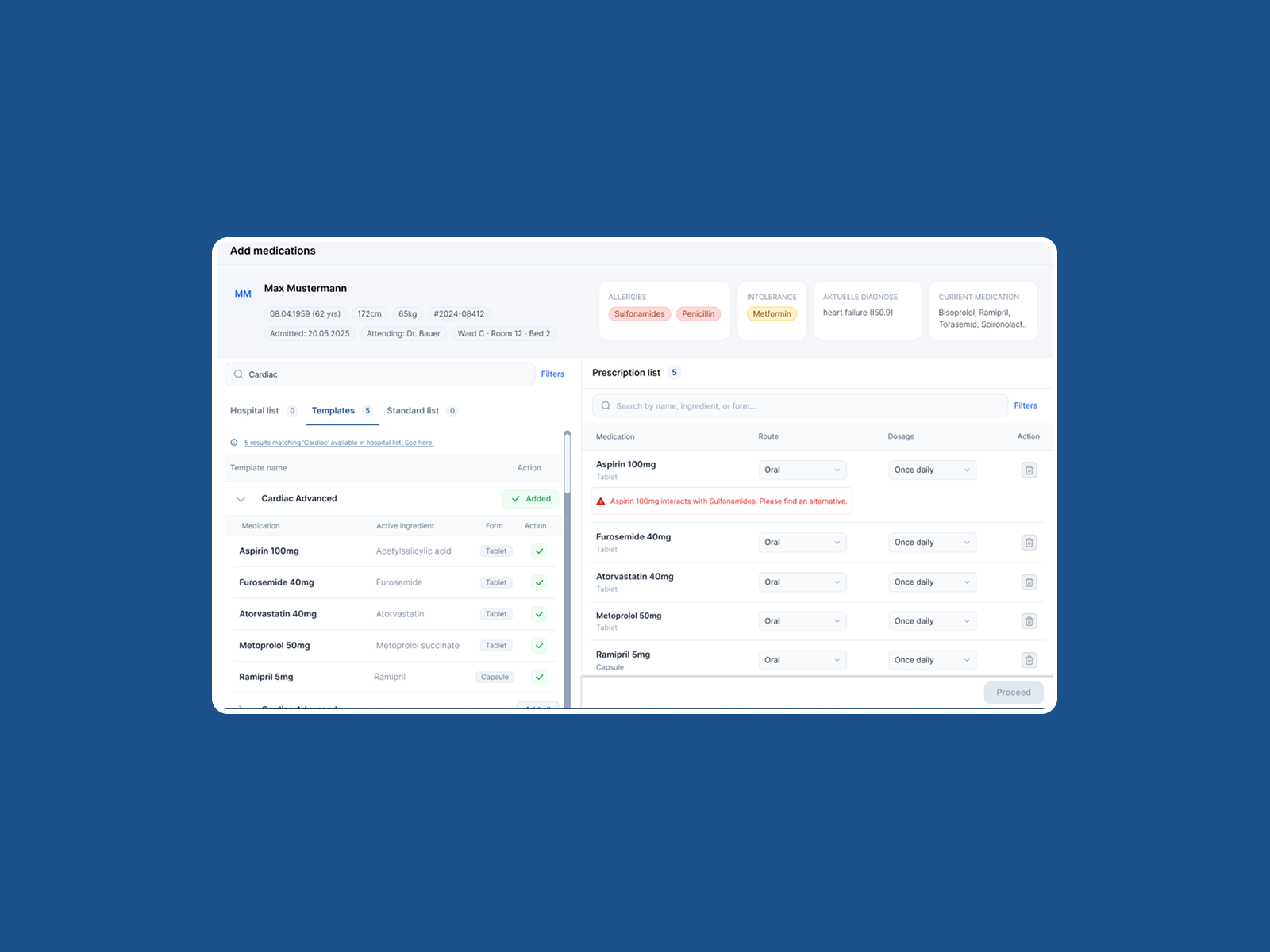
Cardiac Advanced template added to cart. System fires an inline compatibility warning for Aspirin 100mg and interacts with the patient's documented Sulfonamide allergy. A warning appears directly below the medication row in the cart. The proceed button is disabled until the conflict is resolved. Source awareness confirmed—all template medications show as added with green check marks.
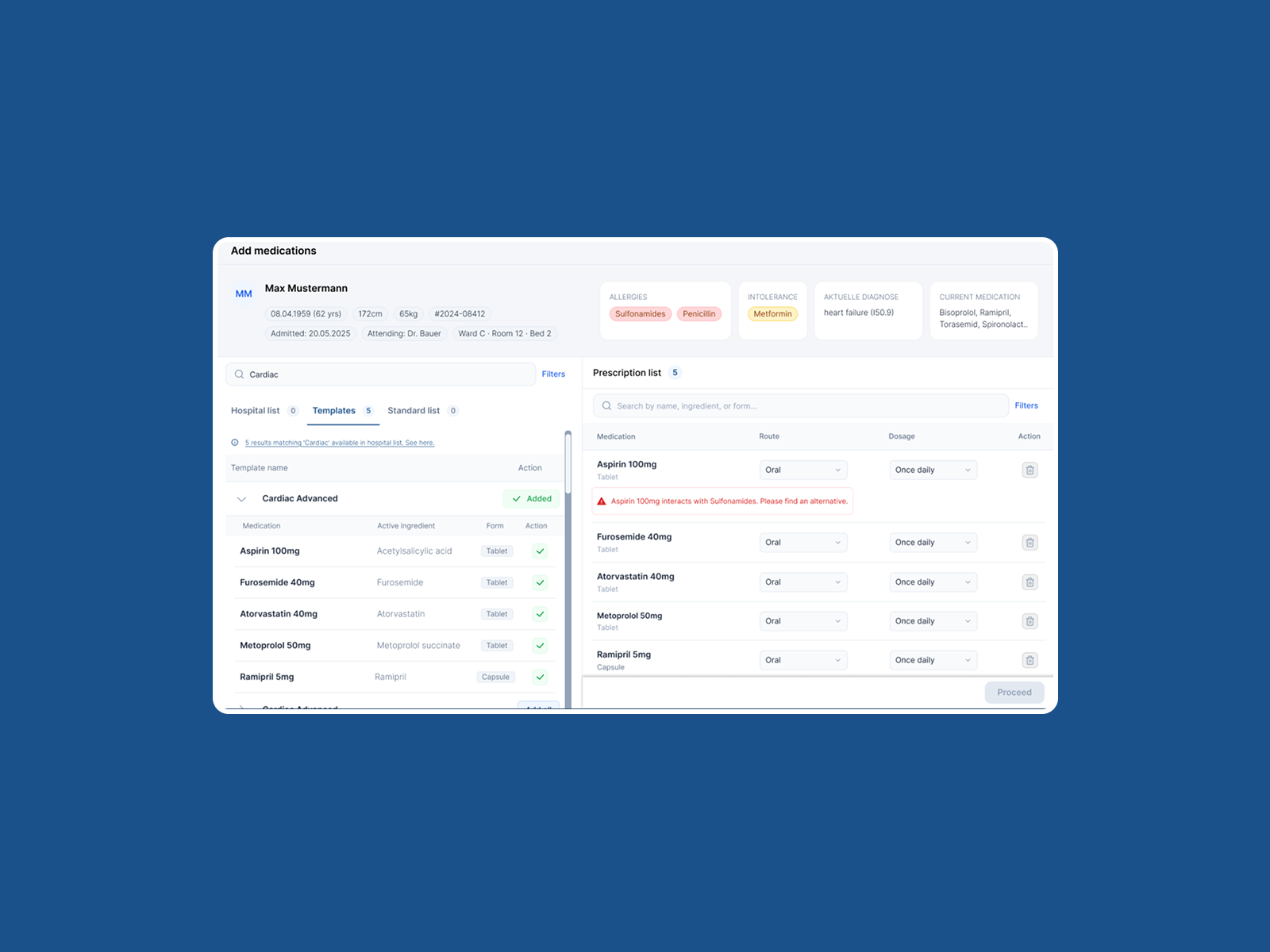
The doctor searches Panto, and the system preserves the last active tab from the previous search context. The templates tab shows five matching regimens. Cross-list hint confirms results available in the hospital list and the standard list. Cart shows four medications from the previous session intact—state persistence across searches confirmed.
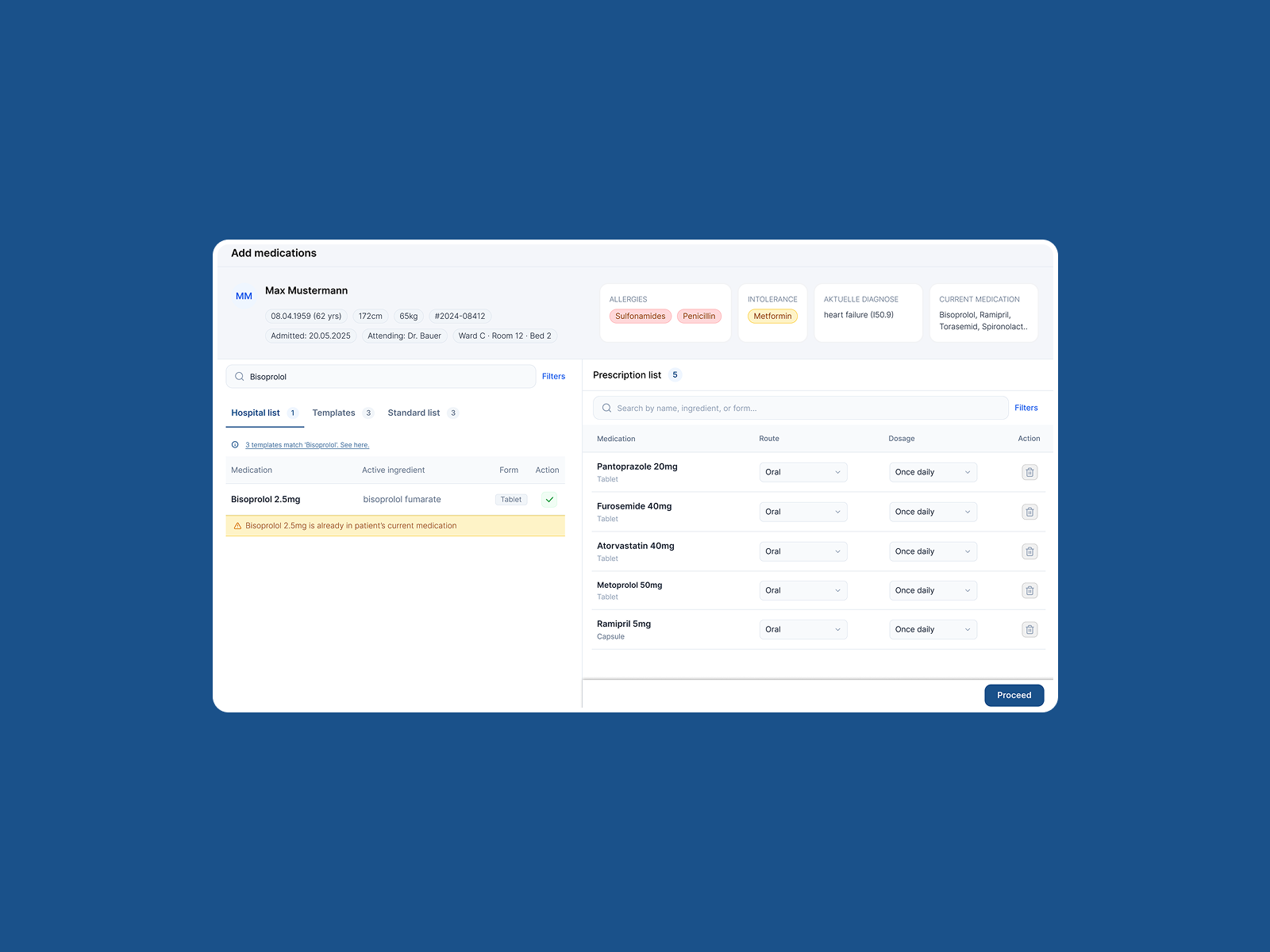
The doctor searches for Bisoprolol—result found in the hospital list, but it's flagged inline: Bisoprolol 2.5mg is already in the patient's current medication. Warning fires at the result row before any cart interaction. Add action visually confirmed as unavailable. Three template matches are shown in the templates tab—the doctor can verify without adding.
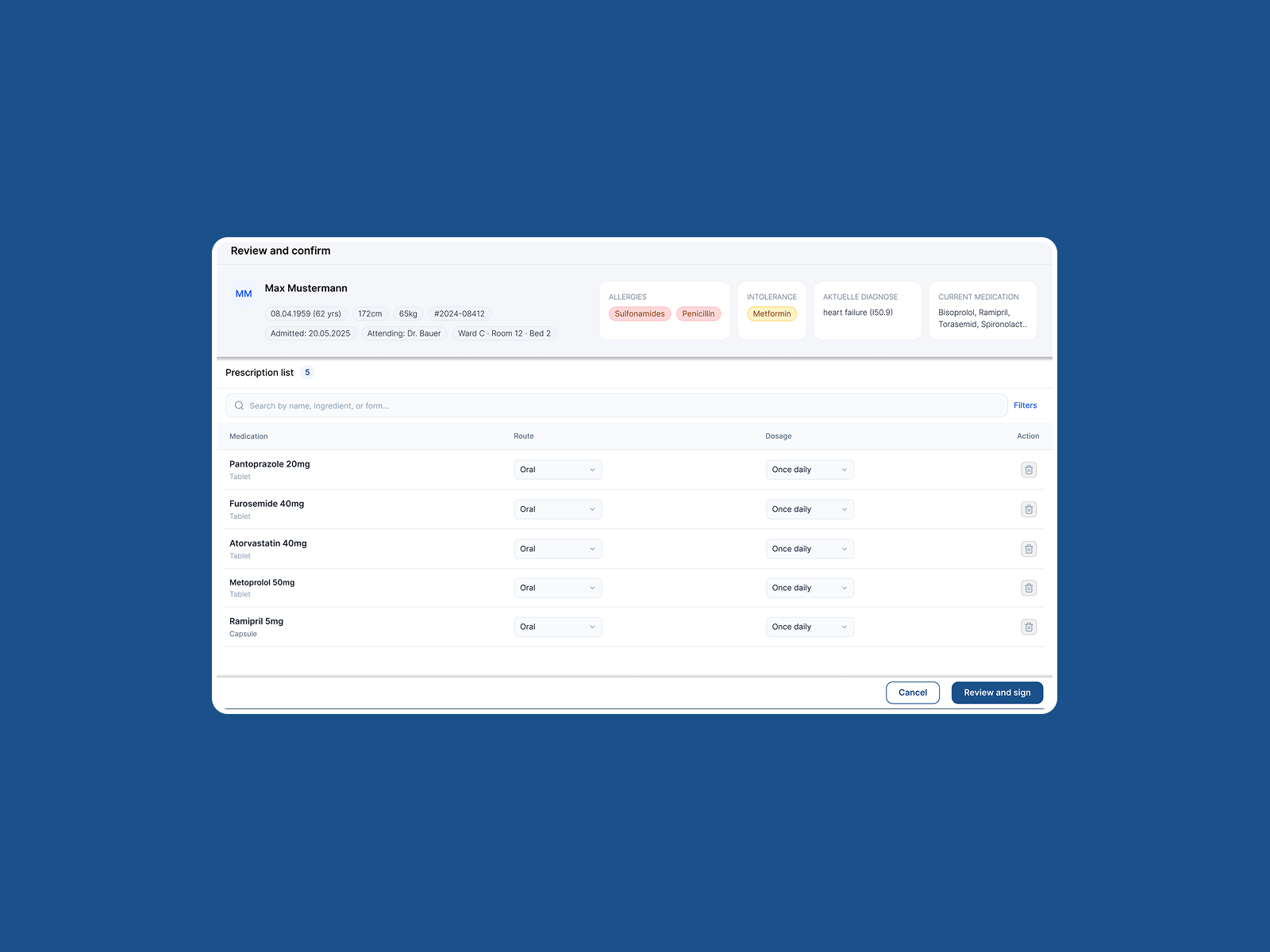
Final review state before signing. Left panel removed—full width given to prescription list for focused review. Patient header with allergies and intolerances remains visible throughout. All five medications shown with route and dosage confirmed. Cancel and review and sign actions clearly separated with visual hierarchy—destructive action secondary, confirmation primary.
RESULT
Physicians found the right medication from the right source in one action, with zero contraindications missed

