Team
1 CTO & PM, 5 Engineers, 1 QA, 1 UX Designe
Timeline
10 months
Year
2020
Clients
Ghana Revenue Authority


01 impact
Error prevention
Regulatory maze
→
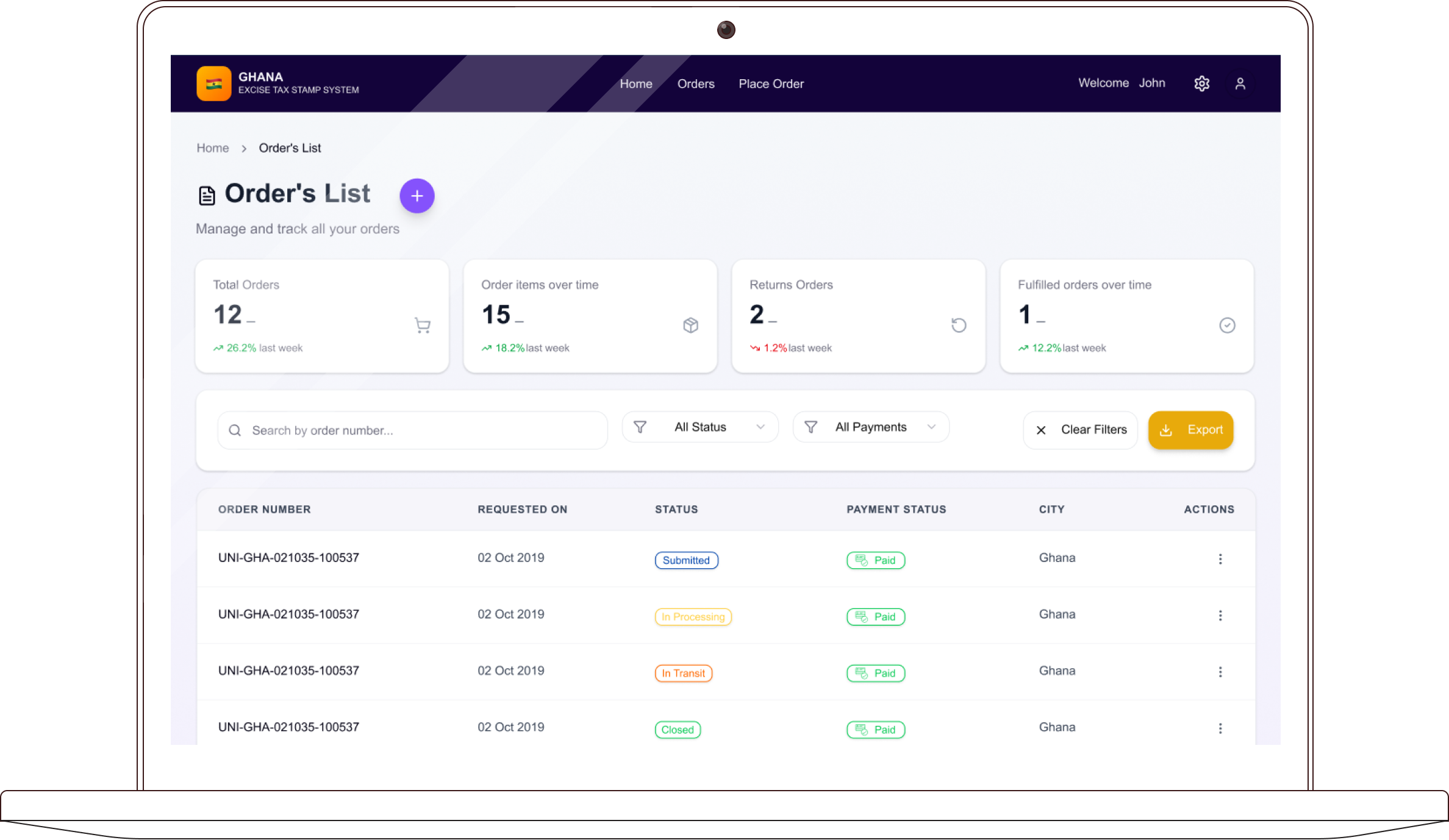
Order success +28%
Was: Retailers moved from confused stamp-type selection and pricing errors to completing orders correctly on first attempt
Now: Simple digitized workflow increased order success up to 28%
02 target users
Licensed manufacturers
Their needs are compliance certainty, order accuracy, visibility into order status and pricing, trust that submissions won't trigger regulatory issues. They carry the compliance risk.
distributors
Their needs are speed and efficiency on mobile in factory/warehouse environments, clear product classification guidance, persistent cart visibility during long multi-line orders, minimal errors without hand-holding. They carry the execution burden.
03 my role
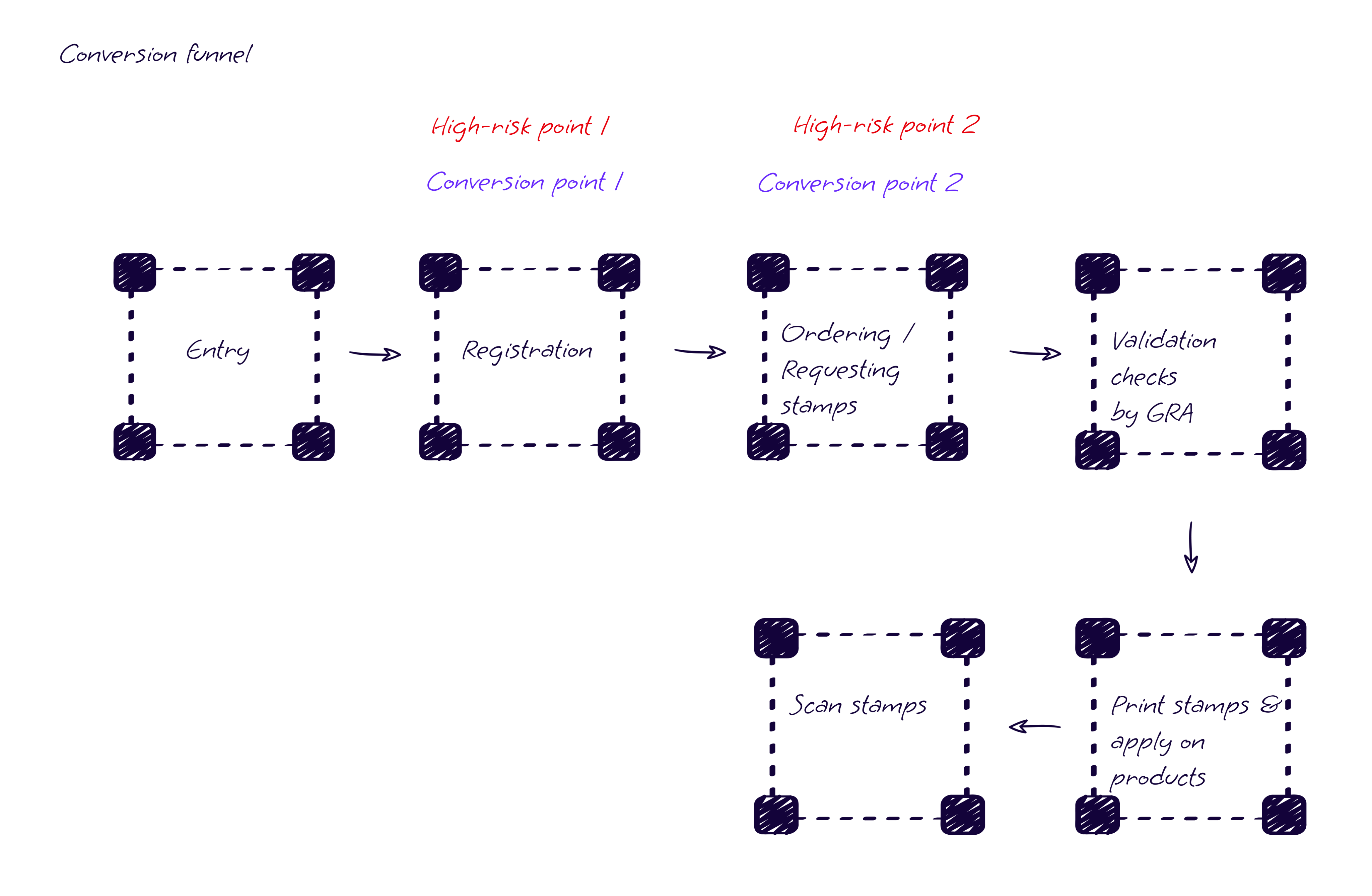
I mapped every identified problem against frequency of occurrence and cost per error. Classification errors were high frequency and high cost—fixing them was the highest-leverage intervention. Cart abandonment was high frequency but lower per-incident cost. Registration drop-off was lower frequency but had a long-tail business cost: every abandoned registration was a manufacturer not using the platform.
I sequenced the work accordingly: classification first, then cart, then registration. I explicitly deprioritised UI polish and navigation improvements until these three were resolved.
Discovery
To understand real ordering behaviour, I conducted:
Reviews of failed and corrected orders
Analysis of QA reports and error logs
UAT pilots with real users
Stakeholder workshops on edge cases
Interviews with operations and fulfilment staff
Research Findings
Three constraints shaped every decision: regulatory reality (the design challenge was to make the mandatory feel manageable, not to negotiate with compliance), physical context (users accessed the platform on mobile factory floors and warehouse environments), and user type (professional, repeat users who valued efficiency over hand-holding).
04 Problem Statement
For manufacturers and importers, there has to be a way to smoothly on-boar onto revenue authority registration system and to order and manage stamps with accuracy to prevent errors, fraud and revenue loss.
06 design decisions
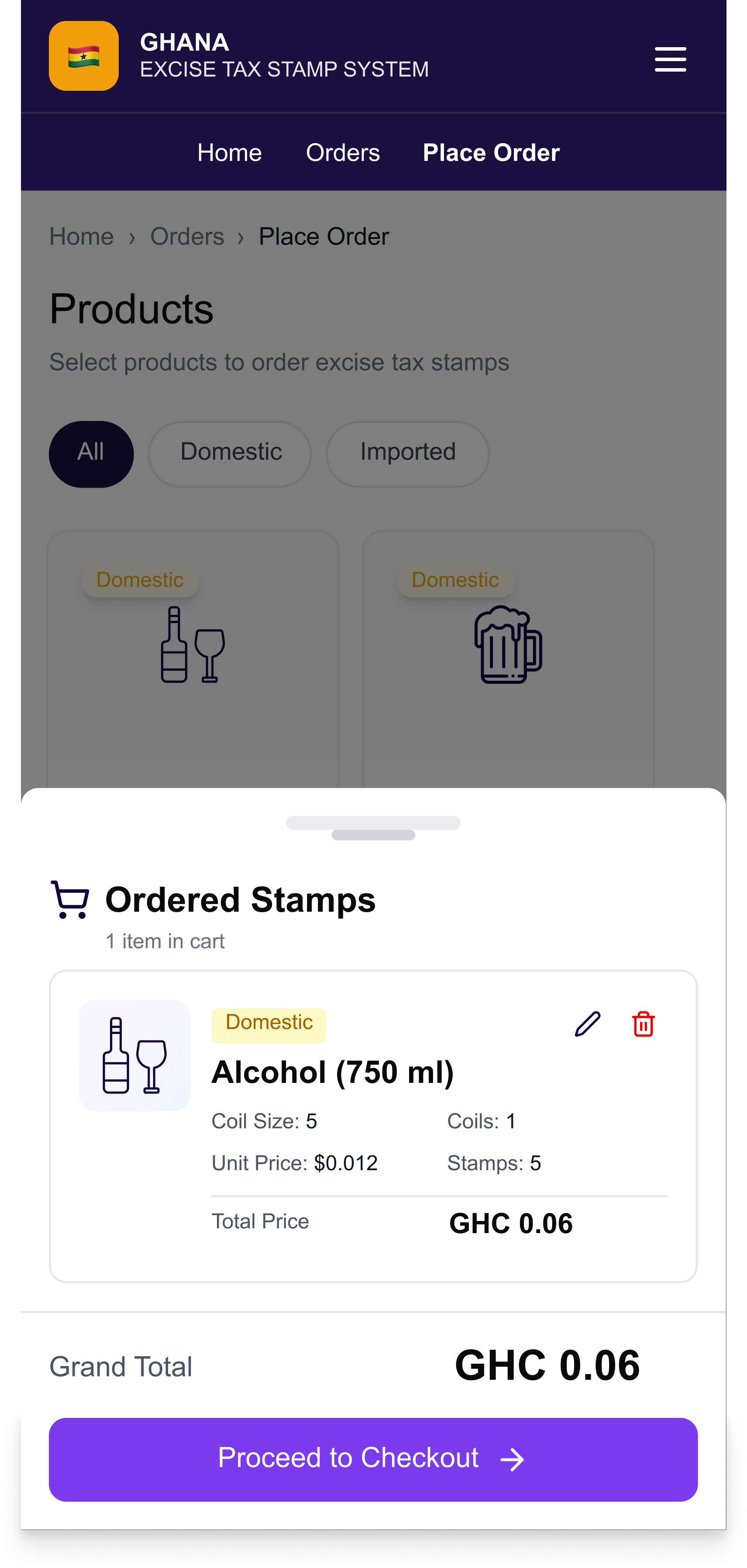
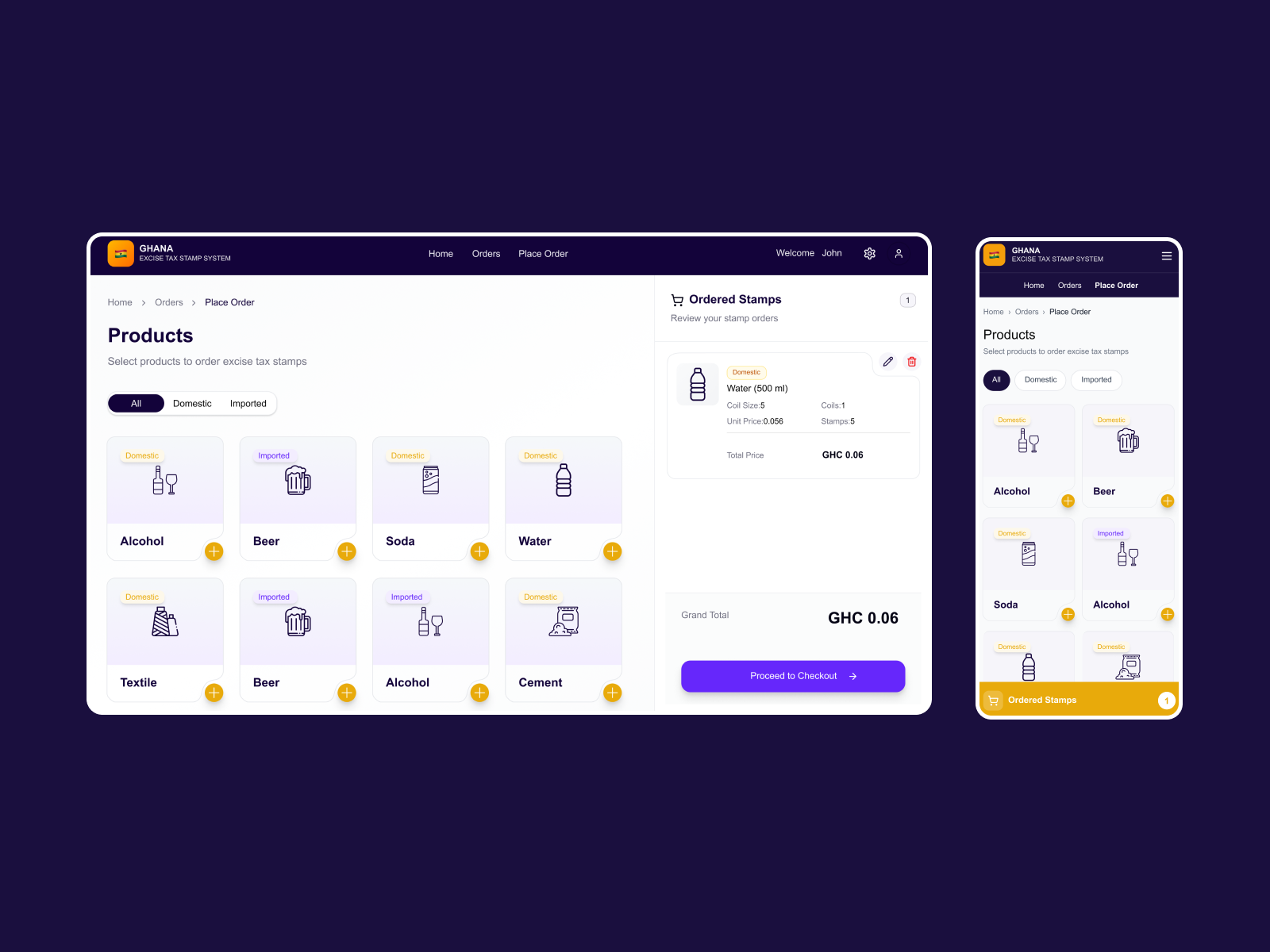
- Persistent Cart with Real-Time Totals
Problem
Users lost awareness of quantities and pricing during long orders, requiring correction and resubmission.
Solution
Designed a persistent cart with real-time totals and quick editing. Users could orient themselves at any point in a long order without losing progress.
- Visual Product Cards with Color-Coded Categories
Scenario
Dr. Yusuf is a cardiologist at RMI. He opens a patient chart to document a consultation for a 58-year-old admitted with chest pain. He needs to review ECG findings, record vitals including BP in both arms, note the echo results, and write a plan.
Problem identified
The template assumed one type of doctor. RMI had many.
Decision I advocated for
The SOAP structure stays consistent. The fields inside adapt. A cardiologist never sees a tooth chart. A dentist never sees an ECG field.
Outcome observed
Doctor adoption was also a direct data quality decision — a cardiologist on pen and paper generates no structured data for billing, analytics, or discharge summaries. Getting doctors onto the system protected the value of every other module in the platform.
08 reflection
I would enhance post-launch product monitoring and continuously track order failure rates by category and user segment to ensure sustained improvement. Involving mobile users earlier in testing would have helped identify failure patterns more effectively.
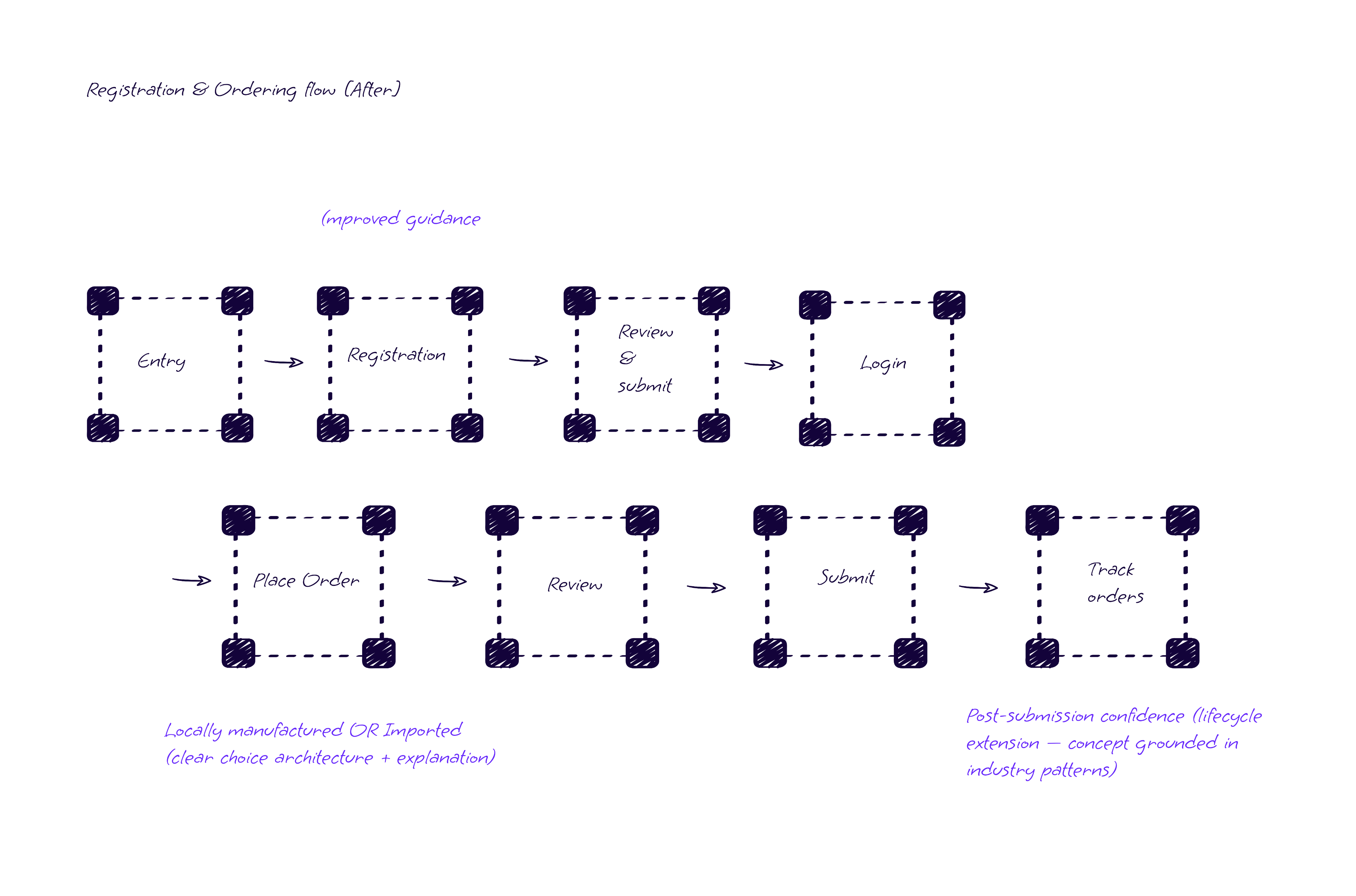
Additionally, I would introduce a post-submission order review screen to summarise user submissions and their compliance status, closing the feedback loop left open by the current design. That final confirmation step—"here's what you submitted and here's why it's compliant"—would reinforce user confidence even after the order is placed.